Muscle tightness, restricted movement, and lingering soft-tissue discomfort can make it difficult to return to normal activities after an injury. Graston Therapy is a form of instrument-assisted manual therapy that uses specially designed tools to work on muscles and other soft tissues. When appropriate, it can be incorporated into a rehabilitation program along with stretching, mobility work, and therapeutic exercise.
What Is Graston Therapy?
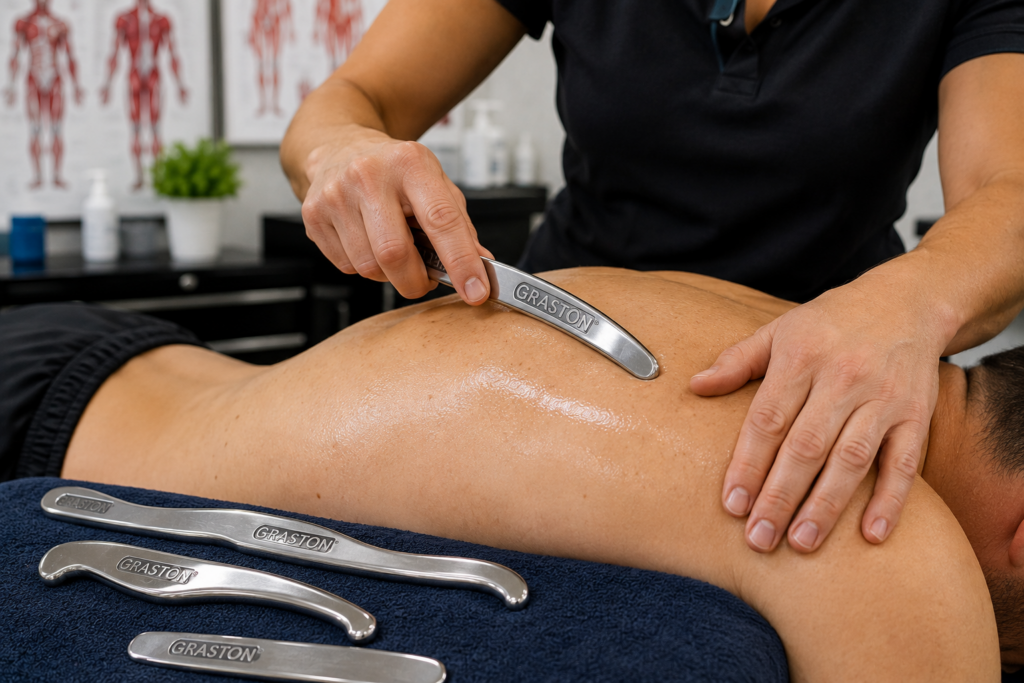
Graston Therapy is a type of instrument-assisted soft-tissue mobilization. Instead of using only the clinician’s hands, specialized instruments are moved over the skin to help the clinician identify and address areas of soft-tissue restriction.
The amount of pressure and the technique used can vary depending on the body area being treated, the patient’s tolerance, and the goals of care.
Why Is It Used?
After an injury, surgery, repetitive activity, or prolonged strain, muscles and other soft tissues may become painful, tight, or less mobile. These problems can sometimes contribute to restricted movement and difficulty performing everyday activities.
Instrument-assisted manual therapy may be used as part of treatment to address these soft-tissue restrictions and improve mobility. It isn’t intended to aggressively “break up” scar tissue or force the body to heal. Instead, it is one tool a clinician may use as part of a larger treatment plan.
What Does Treatment Feel Like?
During treatment, a clinician applies the instrument to the skin and moves it over the targeted area using controlled strokes. Patients may feel pressure or a scraping sensation, but treatment should be adjusted according to comfort and the condition being addressed.
Some temporary tenderness or mild skin redness can occur following treatment. Excessive pain or significant bruising isn’t the goal of Graston Therapy, and patients should communicate with their provider if the treatment feels too intense.
Graston Works Best as Part of a Bigger Plan
Instrument-assisted manual therapy isn’t a complete rehabilitation program by itself. When appropriate, it may be combined with therapeutic exercise, stretching, strengthening, mobility training, physical therapy, or chiropractic care.
For example, treating tight soft tissues around the shoulder may help improve movement, but strengthening and mobility exercises may still be necessary to restore function. The same principle can apply when rehabilitating the neck, back, knee, hip, or other musculoskeletal areas.
Is Graston Therapy Right for Everyone?
Not necessarily. A proper evaluation should come first because certain medical conditions, medications, skin problems, recent injuries, or other factors may make instrument-assisted treatment inappropriate for some patients.
At Easy Reach Chiropractic & Physical Therapy, treatment is based on each patient’s examination findings, symptoms, functional limitations, and rehabilitation goals. When appropriate, Graston or other manual therapy techniques can be incorporated into an individualized plan to help improve movement and function.
Our team serves patients at our Lake Worth and Fort Lauderdale locations.