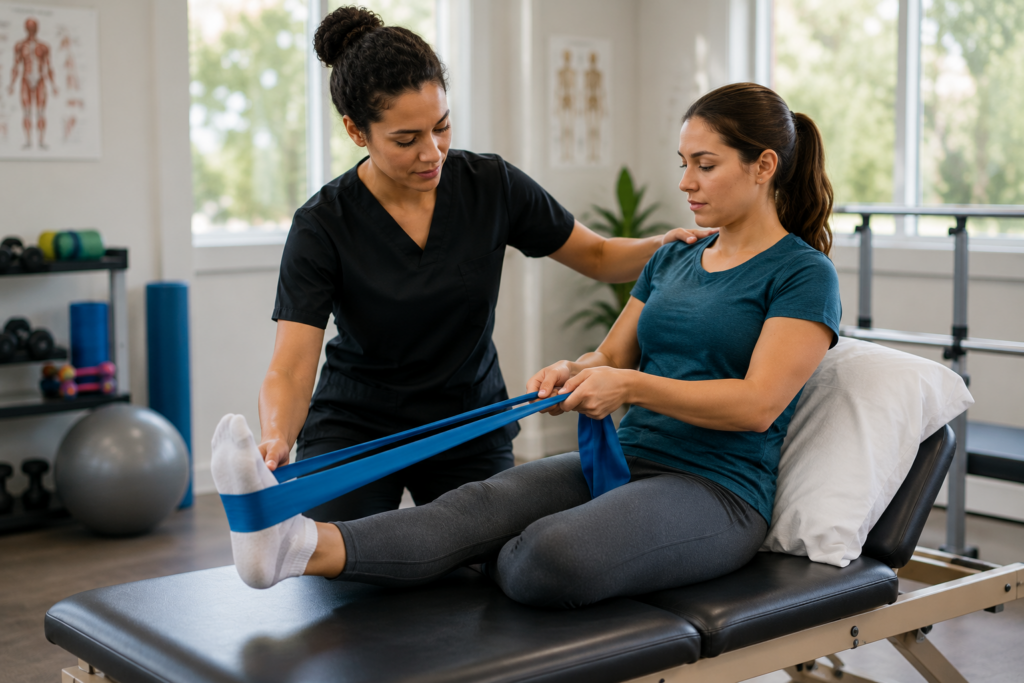
Physical therapy isn’t only for people recovering from surgery or a major injury. It can help people dealing with pain, weakness, stiffness, limited mobility, balance problems, sports injuries, work-related injuries, and difficulty returning to normal activities. Whether physical therapy is appropriate for you depends on your condition, symptoms, functional limitations, and individual treatment needs.
What Is Physical Therapy?
Physical therapy is a form of rehabilitation designed to help improve movement, strength, mobility, balance, endurance, and physical function.
A physical therapist evaluates how an injury or condition is affecting the way you move and perform everyday activities. Treatment is then individualized according to your examination findings and functional goals.
Who May Benefit From Physical Therapy?
Physical therapy may be appropriate for people experiencing a variety of musculoskeletal and functional problems.
You may benefit from an evaluation if pain, weakness, stiffness, or an injury is interfering with your ability to:
- Walk or stand comfortably
- Bend or squat
- Climb stairs
- Lift or carry objects
- Reach overhead
- Exercise or play sports
- Perform your job
- Complete household activities
- Recover after an injury or surgery
- Return to your normal level of activity
Physical Therapy for Neck and Back Pain
Neck and back pain are common reasons people seek rehabilitation.
Pain may develop from an injury, repetitive activities, prolonged sitting, poor movement habits, muscle weakness, or other musculoskeletal conditions.
Depending on the cause of the symptoms, physical therapy may include exercises designed to improve mobility, flexibility, strength, posture, and movement.
What to Expect During Treatment
Spinal decompression sessions are comfortable and non-invasive. Patients remain fully clothed while positioned on the decompression table, and the amount of traction is carefully adjusted based on the area being treated and the patient’s individual needs. Many patients describe the treatment as a gentle stretching sensation. The number and frequency of sessions will vary depending on the condition, severity of symptoms, and response to care.
Physical Therapy After a Motor Vehicle Accident
Motor vehicle accidents can cause injuries involving the neck, back, shoulders, knees, and other areas of the body.
Whiplash and other accident-related injuries may result in pain, stiffness, weakness, reduced range of motion, headaches, or difficulty performing normal activities.
Physical therapy following a motor vehicle accident may focus on gradually restoring movement, strength, flexibility, and function based on the patient’s specific injuries.
Even when an accident initially seems minor, persistent or worsening symptoms should be evaluated.
Physical Therapy for a Work-Related Injury
Work injuries can affect a person’s ability to safely perform essential job duties.
Depending on the occupation, returning to work may require the ability to lift, carry, push, pull, bend, squat, climb, walk, stand, or perform repetitive activities for extended periods.
Physical therapy may help injured workers rebuild strength, mobility, endurance, and functional capacity as they recover.
Treatment should consider the actual physical requirements of the patient’s job rather than focusing only on pain levels.
Physical Therapy for Sports Injuries
Athletes and physically active individuals may also benefit from physical therapy following an injury.
Sprains, strains, knee injuries, shoulder problems, tendon injuries, and other musculoskeletal conditions can affect strength, mobility, stability, and athletic performance.
Rehabilitation may focus on restoring function and gradually preparing the patient to return to exercise or sports safely.
Do I Have to Have Surgery to Qualify for Physical Therapy?
No.
Physical therapy is commonly used following certain surgeries, but surgery is not required to benefit from rehabilitation.
Many patients receive physical therapy as part of conservative treatment in an effort to improve movement and function without surgery.
Whether physical therapy is appropriate depends on the diagnosis, examination findings, symptoms, and individual circumstances.
What Happens During a Physical Therapy Evaluation?
Your initial evaluation helps determine how your condition is affecting your body and daily activities.
Depending on the problem, the physical therapist may evaluate:
- Range of motion
- Strength
- Flexibility
- Balance
- Walking pattern
- Joint mobility
- Functional movements
- Pain with specific activities
- Ability to perform work or recreational tasks
Your treatment goals are also important.
Someone trying to return to an office job may have very different rehabilitation needs from a construction worker, firefighter, athlete, or someone recovering from surgery.
What Happens During Physical Therapy?
Treatment varies according to the patient’s condition and goals.
Your rehabilitation program may include:
- Therapeutic exercise
- Strengthening exercises
- Range-of-motion exercises
- Flexibility training
- Balance and stability exercises
- Functional activities
- Posture and movement education
- Manual techniques when appropriate
- Home exercises
- Other conservative treatments based on your condition
Exercises are typically progressed as your strength, mobility, tolerance, and function improve.
Can Physical Therapy Help With Chronic Pain?
Physical therapy may be beneficial for certain chronic musculoskeletal pain conditions.
When pain persists, people sometimes begin avoiding movement because they are afraid of aggravating their symptoms. Over time, decreased activity can contribute to weakness, stiffness, and reduced physical tolerance.
An appropriate rehabilitation program may help patients gradually improve movement, strength, and function while learning strategies for safely managing activities.
Can Chiropractic Care and Physical Therapy Be Used Together?
Yes, when appropriate.
Some patients may benefit from an integrated treatment approach involving both chiropractic care and physical therapy.
Chiropractic care may address certain musculoskeletal problems involving the spine and joints, while physical therapy can focus on restoring strength, flexibility, mobility, endurance, and functional movement.
At Easy Reach Chiropractic & Physical Therapy, treatment can be coordinated according to the patient’s individual condition and needs.
What About Work Conditioning and Work Hardening?
Some injured workers need more than traditional physical therapy before they can safely return to a physically demanding occupation.
Work Conditioning and Work Hardening are more advanced rehabilitation programs designed to progressively prepare appropriate injured workers for their actual job demands.
Depending on the patient’s occupation, treatment may incorporate:
- Progressive lifting and carrying
- Pushing and pulling
- Squatting and bending
- Walking and standing tolerance
- Strength and endurance training
- Repetitive activities
- Job-specific movements and tasks
These programs may be particularly important for workers whose occupations require significant physical strength, endurance, or repetitive activity.
Do I Need a Referral for Physical Therapy?
Referral and authorization requirements can vary depending on your circumstances, insurance plan, diagnosis, and whether treatment involves a Workers’ Compensation or other injury claim.
Our office can help determine what documentation or authorization may be required for your particular situation.
Being medically appropriate for physical therapy and having insurance coverage for treatment are also two different questions. Coverage and benefits depend on the individual insurance plan.
How Long Will I Need Physical Therapy?
There is no single treatment schedule that applies to everyone.
- Type and severity of the injury
- How long symptoms have been present
- Functional limitations
- Strength and mobility deficits
- Treatment goals
- Response to rehabilitation
- Job or athletic demands
- Medical authorization when applicable
Progress should be reassessed throughout treatment so the rehabilitation program can be adjusted as needed.
Physical Therapy at Easy Reach Chiropractic & Physical Therapy
At Easy Reach Chiropractic & Physical Therapy, physical therapy is individualized according to the patient’s condition, functional limitations, and recovery goals.
We treat appropriate patients recovering from musculoskeletal injuries, motor vehicle accidents, workplace injuries, sports injuries, surgery, and other conditions affecting movement and function.
Treatment may incorporate therapeutic exercise, functional rehabilitation, chiropractic care, Class IV laser therapy, spinal decompression when appropriate, and other conservative treatments based on the patient’s needs.
For appropriate injured workers, we also provide Work Conditioning and Work Hardening to help bridge the gap between traditional rehabilitation and the physical requirements of returning to work.
Are You a Candidate for Physical Therapy?
If pain, weakness, stiffness, an injury, or limited mobility is preventing you from working, exercising, or performing normal everyday activities, a physical therapy evaluation can help determine what is limiting your function and whether rehabilitation may be appropriate.
Contact Easy Reach Chiropractic & Physical Therapy to schedule an evaluation and learn which treatment options may be appropriate for your condition.