
Back and neck pain can interfere with everything from working and sleeping to exercising and enjoying everyday activities. When pressure or irritation involving the spinal discs or nerves contributes to your symptoms, nonsurgical spinal decompression may provide a conservative treatment option. If you’ve never had spinal decompression before, knowing what happens during a session can help you feel more comfortable and prepared.
What Is Spinal Decompression?
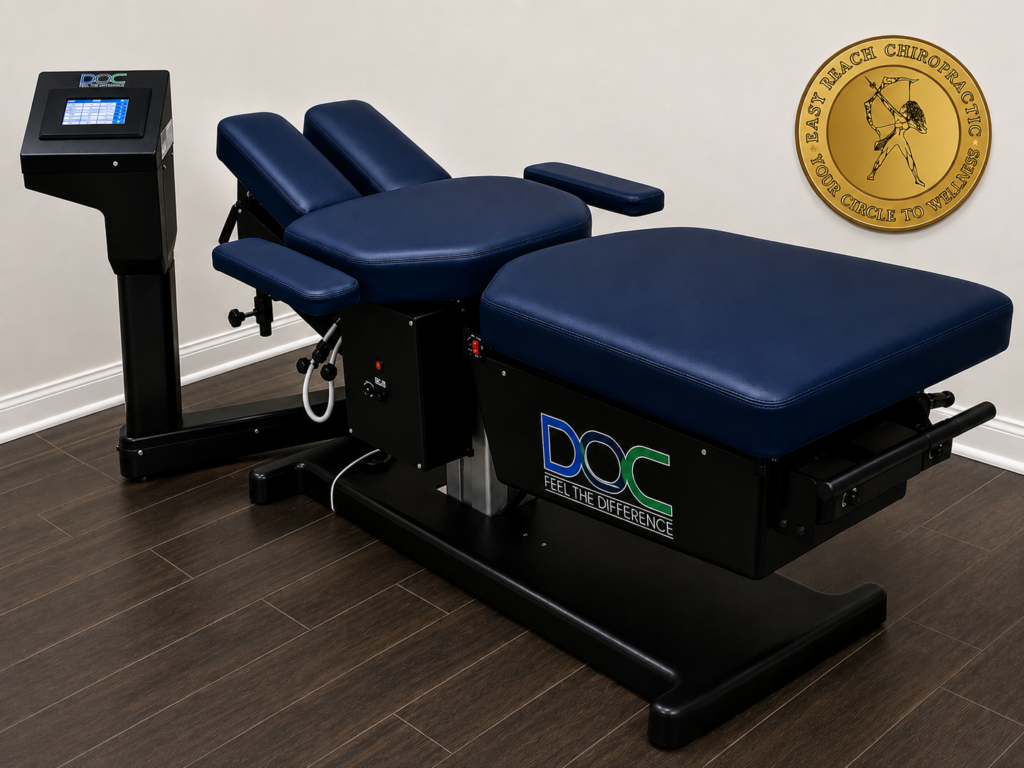
Nonsurgical spinal decompression is a conservative treatment designed to gently stretch the spine using controlled traction.
Your spine consists of vertebrae separated by discs that help cushion movement and absorb stress. Spinal nerves travel through and exit the spine, and irritation or compression involving these structures may contribute to neck pain, back pain, numbness, tingling, weakness, or radiating discomfort.
Spinal decompression uses controlled traction to reduce pressure on affected areas of the spine without surgery or injections.
What Conditions May Be Treated With Spinal Decompression?
Depending on the patient’s examination findings and condition, spinal decompression may be considered for problems such as:
- Herniated discs
- Bulging discs
- Degenerative disc changes
- Sciatica
- Certain forms of nerve compression
- Chronic lower back pain
- Chronic neck pain
- Radiating pain into the arms or legs
Not every patient with neck or back pain is an appropriate candidate for spinal decompression. An evaluation is important before treatment begins.
What Happens Before Your First Session?
Spinal decompression sessions are comfortable and non-invasive. Patients remain fully clothed while positioned on the decompression table, and the amount of traction is carefully adjusted based on the area being treated and the patient’s individual needs. Many patients describe the treatment as a gentle stretching sensation. The number and frequency of sessions will vary depending on the condition, severity of symptoms, and response to care.
Spinal Decompression at Easy Reach Chiropractic & Physical Therapy
Before beginning spinal decompression, we evaluate your symptoms, health history, examination findings, and the location and nature of your pain.
When appropriate, imaging studies and other medical information may also be reviewed.
This helps determine whether spinal decompression is appropriate for your condition and whether treatment should focus on the cervical spine, lumbar spine, or another treatment approach altogether.
Getting Positioned on the Decompression Table
During treatment, you lie comfortably on a specialized decompression table.
A harness is positioned around the appropriate area of the body to help maintain proper positioning during treatment.
For lumbar decompression, the treatment is directed toward the lower back. For cervical decompression, the setup is adjusted to address the neck.
The equipment is then configured according to your individual treatment plan.
What Does the Treatment Feel Like?
Once you are positioned comfortably, the decompression system applies gentle, controlled traction to the spine.
The amount and pattern of traction are selected according to the patient’s condition and treatment needs.
Rather than using a sudden pulling motion, decompression therapy gradually applies and releases controlled traction.
Many patients are able to relax during their sessions. You should communicate with the treating provider if you experience unusual or increasing discomfort during treatment so the settings can be evaluated.
How Long Does a Spinal Decompression Session Take?
The original Easy Reach treatment information describes decompression sessions as typically lasting about 30–45 minutes. The exact treatment time may vary depending on the patient’s condition and individualized treatment plan.
Your provider will determine the appropriate duration and frequency of treatment based on your examination findings and how you respond to care.
Will I Need More Than One Treatment?
Spinal decompression is generally provided as a series of treatments rather than as a single session.
The number and frequency of visits depend on several factors, including the condition being treated, severity and duration of symptoms, examination findings, and response to treatment.
Progress should be monitored throughout care so the treatment plan can be modified when necessary.
Can Spinal Decompression Be Combined With Other Treatments?
Yes. Spinal decompression may be one component of a broader conservative treatment plan.
At Easy Reach Chiropractic & Physical Therapy, an individualized treatment plan may incorporate spinal decompression with chiropractic care, physical therapy and rehabilitation, therapeutic exercise, laser therapy, and other appropriate conservative treatments.
Combining treatments may allow us to address not only pain but also mobility, strength, flexibility, and functional limitations.
Spinal Decompression for Sciatica
Sciatica may cause lower back or buttock pain that travels into the leg. Some patients also experience numbness, tingling, burning sensations, or weakness.
When sciatic symptoms are associated with certain disc or nerve-related problems, spinal decompression may be considered as part of a conservative treatment plan.
Because sciatica can have different causes, an evaluation is necessary to determine which treatment approach is appropriate.
Spinal Decompression After a Motor Vehicle Accident
Motor vehicle accidents can cause injuries involving the muscles, joints, spinal discs, and other structures of the neck and back.
Some accident patients develop disc-related problems or nerve irritation that results in neck pain, lower back pain, numbness, tingling, or pain traveling into an arm or leg.
When appropriate for the patient’s specific injuries, spinal decompression may be incorporated into a broader rehabilitation program following a motor vehicle accident.
Treatment following an accident should always be based on an examination and the patient’s specific diagnosis and clinical findings.
What Happens After Your Session?
After decompression treatment, your provider may recommend specific exercises, stretches, activity modifications, or other treatments depending on your condition.
Your provider will also monitor how you respond to treatment from visit to visit.
The goal is not simply to provide temporary relief. Your overall treatment plan may also address mobility, strength, flexibility, movement patterns, and other factors contributing to your symptoms.
Is Spinal Decompression Right for Everyone?
No.
Although spinal decompression is noninvasive, it is not appropriate for every patient or every type of back or neck pain.
Certain medical conditions, previous surgeries, fractures, severe osteoporosis, pregnancy, and other factors may affect whether decompression is appropriate.
That is why treatment should begin with an evaluation rather than assuming spinal decompression is appropriate simply because someone has back or neck pain.
Spinal Decompression at Easy Reach Chiropractic & Physical Therapy
At Easy Reach Chiropractic & Physical Therapy, spinal decompression is one of the conservative treatment options available for appropriate patients experiencing certain neck, back, disc, or nerve-related symptoms.
We evaluate each patient’s condition individually and develop a treatment plan based on symptoms, examination findings, functional limitations, and treatment goals.
If persistent neck pain, back pain, sciatica, numbness, tingling, or radiating discomfort is interfering with your daily activities, schedule an evaluation to determine whether nonsurgical spinal decompression may be appropriate for you.