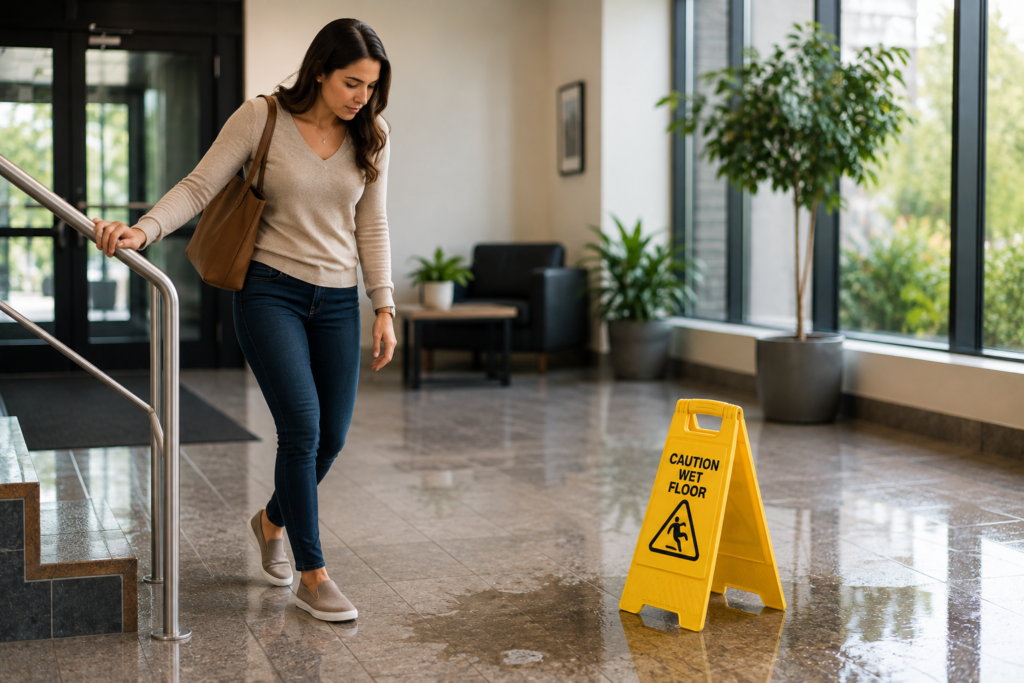
A slip-and-fall can happen in seconds, but the resulting injury can affect your mobility, work, exercise, and everyday activities for much longer. Wet floors, uneven surfaces, poor lighting, clutter, and even the wrong footwear can increase your risk of falling. While not every accident can be prevented, a few practical habits can help you stay safer at home, at work, and while you’re out in the community.
1. Pay Attention to Your Surroundings
Many falls happen because something unexpected is in the walking path. Wet floors, loose rugs, electrical cords, uneven pavement, clutter, and poorly marked steps can all create hazards.
When entering an unfamiliar area, take a moment to look at the surface ahead of you. This is especially important around entrances, bathrooms, parking lots, stairs, and areas that may become wet after rain.
At home, keeping walkways clear and securing loose rugs can make frequently used areas safer.
2. Wear the Right Shoes
Your footwear can make a significant difference in how stable you feel while walking.
Shoes that fit properly and provide appropriate traction are especially important when walking on wet or slippery surfaces. Worn soles, unstable footwear, or shoes that don’t fit correctly may make it harder to maintain your balance.
Consider the activity and environment when choosing your footwear—not just how the shoes look.
3. Don’t Rush
Moving too quickly can make it harder to recognize a hazard or recover if you lose your footing.
Use handrails when they’re available, take extra care on stairs, and slow down when walking across wet or uneven surfaces. If you’re carrying something large enough to block your view of the floor, make more than one trip or ask for assistance.
A few extra seconds can be worth it.
4. Work on Strength and Balance
Your environment isn’t the only factor involved in preventing falls. Strength, balance, coordination, mobility, and reaction time also affect your ability to move safely.
Physical therapy may help individuals who have difficulty with balance, lower-extremity weakness, or mobility limitations. Depending on the person’s needs, treatment may include strengthening, balance exercises, gait training, flexibility work, and functional activities.
Improving these abilities cannot guarantee that a fall won’t happen, but it may help you move with greater confidence and control.
What If You’ve Already Fallen?
Some injuries are obvious immediately after a fall, while others may become more noticeable later.
Slip-and-fall injuries can involve the neck, back, shoulders, hips, knees, ankles, wrists, or other areas of the body. If you hit your head, experience severe pain, cannot bear weight, notice significant swelling or deformity, lose consciousness, or develop neurological symptoms such as weakness, numbness, confusion, or worsening dizziness, seek prompt medical attention.
For non-emergency musculoskeletal injuries, an evaluation can help determine what structures may have been affected and whether rehabilitation is appropriate.
At Easy Reach Chiropractic & Physical Therapy, we evaluate musculoskeletal injuries and functional limitations and develop individualized treatment plans when chiropractic care or physical therapy is appropriate.
We serve patients at our Lake Worth and Fort Lauderdale locations.