Joint pain can make everyday activities—walking, reaching, exercising, working, or even getting comfortable at night—more difficult. Although discomfort may feel as though it is coming directly from a joint, tight or irritated muscles and other soft tissues surrounding the joint can also contribute to pain and restricted movement. For some patients, manual therapy can be a helpful part of a broader rehabilitation plan designed to improve movement and function.
Joint Pain Isn’t Always Just About the Joint
Your joints rely on surrounding muscles, tendons, ligaments, and other soft tissues for movement and stability. When these tissues become tight, irritated, or overworked, normal movement may become uncomfortable.
This can happen after an injury, during recovery from surgery, because of repetitive activities, or when the body begins compensating for pain in another area. For example, someone experiencing knee pain may change the way they walk, placing additional demands on the muscles around the knee, hip, and lower back.
What Is Manual Therapy?
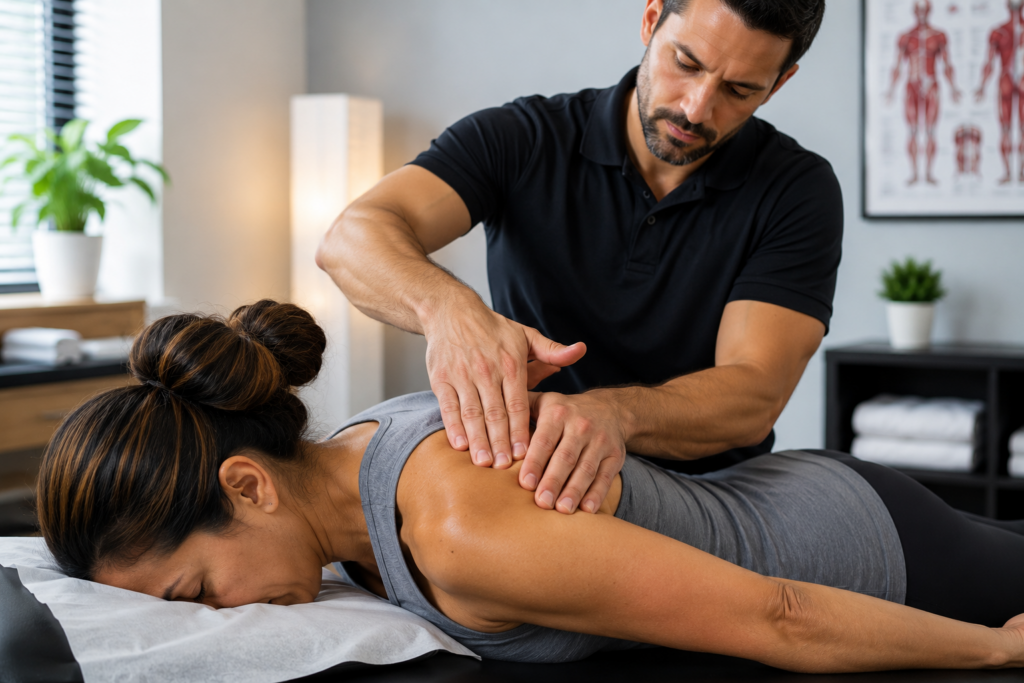
Manual therapy refers to hands-on techniques used by trained healthcare professionals to address musculoskeletal restrictions and help improve movement. Depending on the patient’s condition and treatment goals, techniques may focus on muscles, soft tissues, or joint mobility.
Manual therapy may help decrease muscle tension, improve mobility, and make movement more comfortable. The specific techniques used should always be based on the patient’s examination findings and individual needs.
Manual Therapy Works Best as Part of Rehabilitation
Hands-on treatment may provide relief, but persistent joint problems often require more than treating the painful area alone. Strength, flexibility, mobility, balance, previous injuries, and movement patterns can all contribute to symptoms.
That’s why manual therapy may be combined with physical therapy, therapeutic exercise, stretching, strengthening, and mobility training.
For example, a patient with shoulder pain may receive hands-on treatment to address restricted soft tissues while also performing exercises designed to gradually restore shoulder mobility and strength.
What Types of Joint Problems May Benefit?
Manual therapy may be incorporated into treatment for patients experiencing musculoskeletal problems involving areas such as the:
- Shoulders
- Hips Knees
- Neck and spine
- Other joints and surrounding soft tissues
However, not every painful joint should immediately receive hands-on treatment. Significant swelling, a recent traumatic injury, suspected fracture or dislocation, infection, or other concerning symptoms should be properly evaluated before treatment begins.
Finding the Cause of Persistent Joint Pain
If joint pain continues, repeatedly returns, or interferes with normal activities, identifying what is contributing to the problem is more important than simply treating the location that hurts.
At Easy Reach Chiropractic & Physical Therapy, we evaluate mobility, strength, function, previous injuries, and movement limitations to better understand each patient’s symptoms. When appropriate, manual therapy may be incorporated into an individualized chiropractic or physical therapy rehabilitation program.
With locations in Lake Worth and Fort Lauderdale, our goal is to help patients move more comfortably, improve function, and return to the activities that matter to them.