
Back pain can make it difficult to work, exercise, sleep, drive, or simply get through everyday activities comfortably. When pain is related to certain disc or spine conditions, nonsurgical spinal decompression may be an option for some patients. This gentle, controlled treatment is designed to reduce pressure on affected spinal structures without surgery or injections.
What Is Nonsurgical Spinal Decompression?
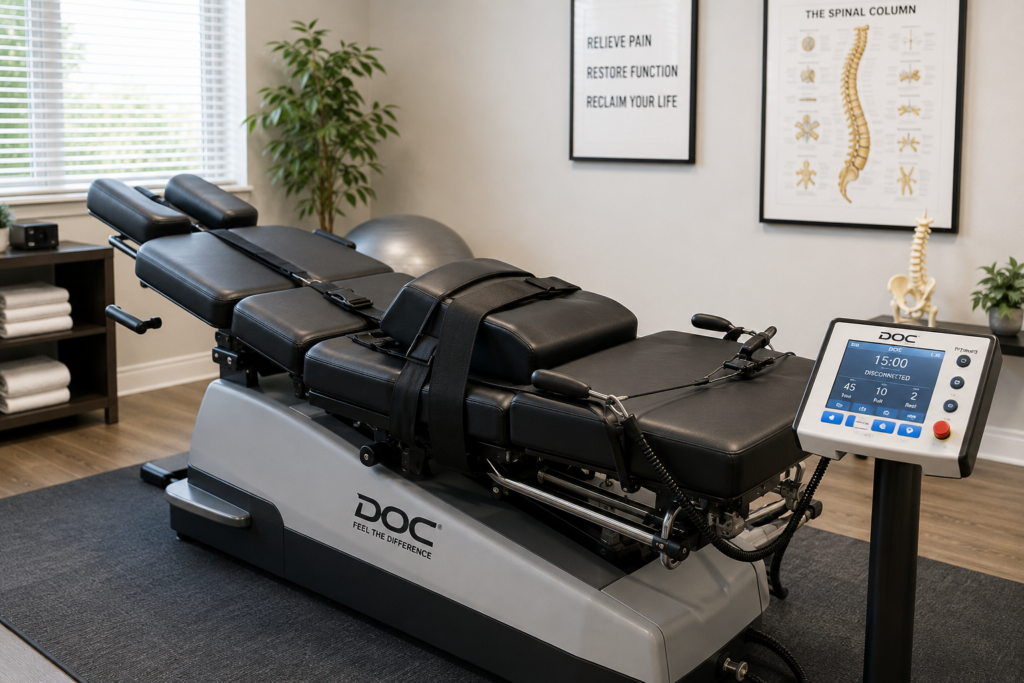
Nonsurgical spinal decompression is a type of motorized traction therapy that gently stretches the spine using a specialized treatment table. The amount and pattern of traction are controlled according to the patient’s condition, treatment area, and tolerance.
Unlike surgery, the treatment does not involve incisions or anesthesia. Patients remain comfortably positioned on the table while controlled traction and relaxation cycles are applied to the spine.
How Can Spinal Decompression Help Back Pain?
Certain conditions can place pressure on spinal discs and nearby nerve structures. By gently stretching the spine, decompression therapy is designed to temporarily reduce pressure within the treated area and create an environment that may help relieve symptoms for appropriately selected patients.
Patients with disc-related back pain may experience symptoms that extend beyond the lower back. Irritated or compressed nerves can contribute to pain traveling into the buttocks or legs, as well as numbness or tingling. This is one reason an examination is important before determining whether decompression is an appropriate treatment option.
What Conditions May Be Treated?
Depending on the patient’s diagnosis and examination findings, nonsurgical spinal decompression may be considered for certain conditions involving the lumbar or cervical spine, including:
- Herniated or bulging discs
- Degenerative disc conditions
- Sciatica and radiating leg pain
- Certain types of chronic lower back pain
- Neck pain associated with appropriate disc conditions
- Nerve irritation related to certain spinal conditions
Spinal decompression is not appropriate for every type of neck or back pain. Your medical history, examination findings, symptoms, and any available diagnostic imaging should be considered before treatment begins.
What Does Treatment Feel Like?
During treatment, the patient lies on the decompression table while a harness or positioning system helps apply controlled traction to the targeted area. The treatment is adjusted according to the patient’s condition and comfort level.
Many patients describe the treatment as a gentle stretching sensation. Treatment should not involve forceful pulling, and the settings can be modified based on how the patient responds.
Spinal Decompression as Part of a Treatment Plan
Spinal decompression sessions are comfortable and non-invasive. Patients remain fully clothed while positioned on the decompression table, and the amount of traction is carefully adjusted based on the area being treated and the patient’s individual needs. Many patients describe the treatment as a gentle stretching sensation. The number and frequency of sessions will vary depending on the condition, severity of symptoms, and response to care.
Spinal decompression does not necessarily need to be used by itself. Depending on the patient’s condition, it may be combined with chiropractic care, physical therapy, therapeutic exercise, stretching, or other conservative treatments.
For example, decompression may address an appropriate disc-related component of a patient’s symptoms while rehabilitation focuses on improving strength, mobility, flexibility, and functional movement. The goal is to develop a treatment plan based on what is actually contributing to the patient’s problem rather than relying on a single treatment for every type of back pain.
Is Spinal Decompression Right for You?
Persistent back pain deserves a proper evaluation, particularly when it is accompanied by pain traveling into the leg, numbness, tingling, weakness, or difficulty performing normal activities.
At Easy Reach Chiropractic & Physical Therapy, we evaluate each patient before recommending spinal decompression. If the treatment is appropriate, it can be incorporated into an individualized conservative care plan designed around the patient’s symptoms and functional needs.
We provide nonsurgical spinal decompression and other conservative treatment options at our Lake Worth and Fort Lauderdale, Florida locations. Contact Easy Reach Chiropractic & Physical Therapy to schedule an evaluation and find out whether spinal decompression may be appropriate for your neck or back condition.