
If you’re considering nonsurgical spinal decompression for persistent back or neck pain, one of your first questions may be, “How long will it take before I feel a difference?” The answer isn’t exactly the same for everyone. Your condition, how long you’ve had symptoms, the severity of the problem, and how your body responds to treatment can all affect your progress.
How Does Spinal Decompression Work?
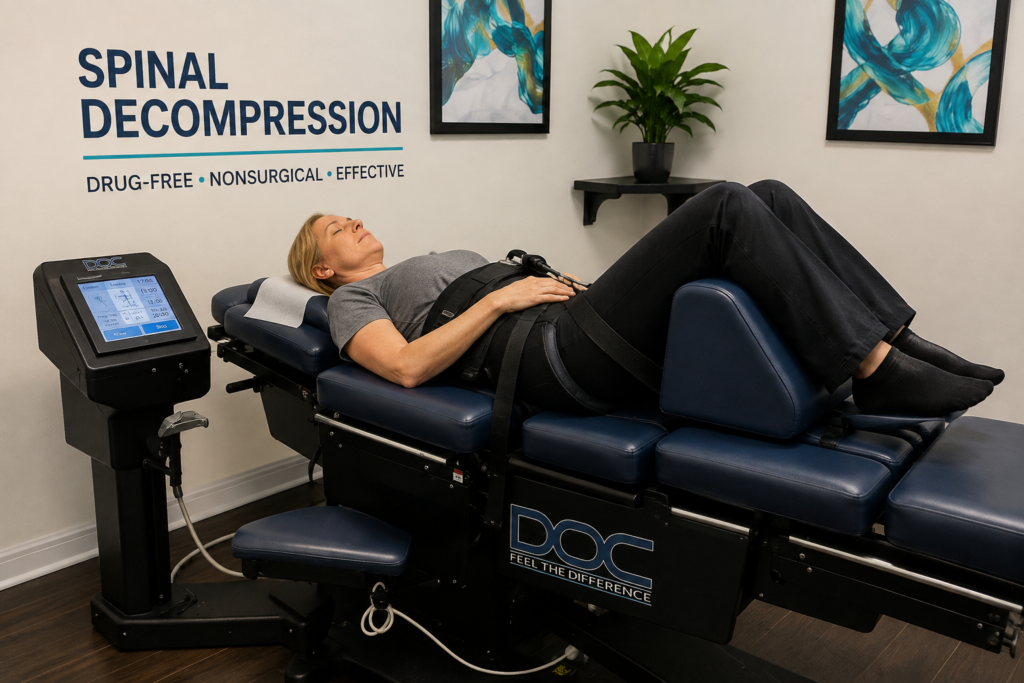
Nonsurgical spinal decompression uses controlled traction to gently stretch and relax the spine. During treatment, the patient lies on a specialized decompression table while carefully controlled forces are applied to the targeted area.
For appropriately selected patients, this process may help reduce pressure on affected spinal structures and may be considered for certain disc-related conditions associated with neck or lower back pain.
When Will I Start Feeling Better?
There isn’t a specific number of treatments that guarantees improvement. Some patients may notice changes relatively early, while others require a longer course of care before meaningful improvement becomes noticeable.
Progress also isn’t always perfectly steady. You may notice that sitting becomes more comfortable, you’re able to walk longer, or certain movements become easier before your pain level changes significantly. These functional improvements are also important signs of progress.
How Long Is a Spinal Decompression Treatment Plan?
The length and frequency of treatment should be determined individually rather than using the same schedule for every patient. Your provider considers your examination findings, symptoms, diagnosis, medical history, response to treatment, and functional limitations when developing the plan.
Your progress should also be reassessed throughout care. If symptoms are not responding as expected, the treatment plan may need to be modified, or additional evaluation may be appropriate.
Combining Decompression With Rehabilitation
Spinal decompression does not necessarily need to stand alone. When appropriate, treatment may be combined with physical therapy, therapeutic exercise, mobility work, strengthening, or other conservative care.
For example, reducing irritation may make movement more comfortable, while rehabilitation can address weakness, flexibility, posture, endurance, and movement patterns that may have developed while you were in pain. The goal is not simply to get through a certain number of decompression sessions, but to improve how you function in everyday life.
Is Spinal Decompression Right for Everyone?
No. Spinal decompression is not appropriate for every type of back or neck pain, and certain medical conditions may make this treatment unsuitable. An evaluation should come first to determine the likely source of your symptoms and whether decompression is an appropriate option.
At Easy Reach Chiropractic & Physical Therapy, we evaluate each patient before recommending a treatment plan. When nonsurgical spinal decompression is appropriate, we monitor progress and can incorporate chiropractic care, physical therapy, or rehabilitation based on the patient’s individual needs.
Our Lake Worth and Fort Lauderdale locations provide conservative treatment options for patients dealing with back pain, neck pain, certain disc-related conditions, and other musculoskeletal problems.